November 1, 2026
How to Dress a Baby for a Canadian Winter: A Simple Layering Guide
Canadian winters can be long and cold, and it's hard to know how much to put on a baby. Too little and they're chilly; too much and they overheat. Layering solves both: you can add or remove a layer as you move between a cold street, a warm car and a heated home.
The easy rule: one more layer than you
A good starting point is to dress your baby in one more layer than you're wearing to feel comfortable. Then check them: feel the back of their neck or their tummy. Warm and dry is right. Sweaty means too many layers; cool skin means add one.
The three layers
1. Base layer: soft and breathable
Next to the skin, choose a natural fibre that breathes and handles a bit of moisture. A cotton bodysuit or a footed cotton sleeper is ideal. Cotton mul (muslin) is light and airy; ribbed cotton is a little warmer.
2. Middle layer: warmth
Add pants and a long-sleeve top, a sweater or a cardigan. Wool and cashmere keep warmth in without bulk and stay warm even when slightly damp.
3. Outer layer: wind and cold
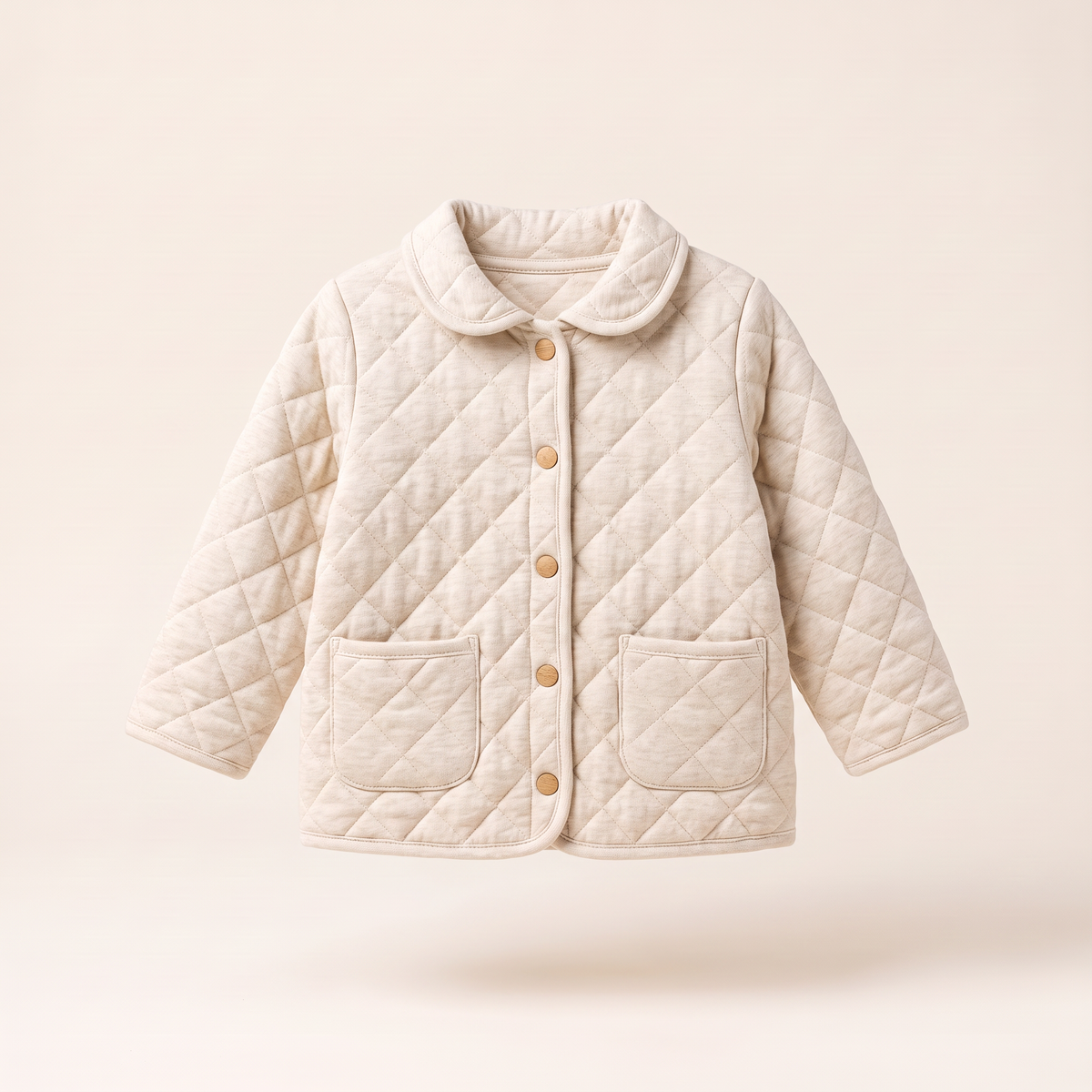
Outside, add a quilted jacket or a snowsuit, a hat that covers the ears, mittens and warm socks or booties. Our quilted cotton jacket is a light outer layer for cool fall and spring days, or a warm middle layer under a winter coat.
Hands, feet and head
Babies lose heat quickly through their heads, and little hands and feet get cold first. A soft hat, mittens and warm socks make a big difference. Merino wool socks are especially good in winter boots because they stay warm when damp.
Car seats: no puffy coats
Transport Canada advises against bulky snowsuits or puffy coats under car seat harnesses, because they compress in a crash and leave the straps too loose. Instead:
- Dress your baby in thin, warm layers, like a sleeper plus a fleece or knit layer.
- Buckle them in snugly.
- Put a blanket or their coat over the top of the harness, not under it.
Indoors and at night
Homes are often warmer than we think. Indoors, a bodysuit and pants or a sleeper is usually enough. At night, follow safe sleep advice: no loose blankets, pillows or bumpers in the crib. Use a snug sleeper or a wearable sleep sack instead, and keep the room comfortably cool.
Signs your baby is too hot or too cold
- Too hot: sweaty neck or hair, flushed cheeks, fast breathing, fussiness.
- Too cold: cool chest or tummy, mottled skin, unusual quietness.
Hands and feet often feel cool even when babies are fine, so check the chest or neck instead.
A simple winter checklist
- 4–6 bodysuits or sleepers as base layers
- 2–3 warm middle layers (sweater, cardigan, fleece)
- 1 jacket or snowsuit for outdoors (not in the car seat)
- Hat, mittens and 3–4 pairs of warm socks
- A wearable sleep sack for nights
Need help with sizes? See our size guide in centimetres and kilograms.