October 25, 2026
Linen vs Cotton for Toddlers: What to Choose for Canadian Seasons
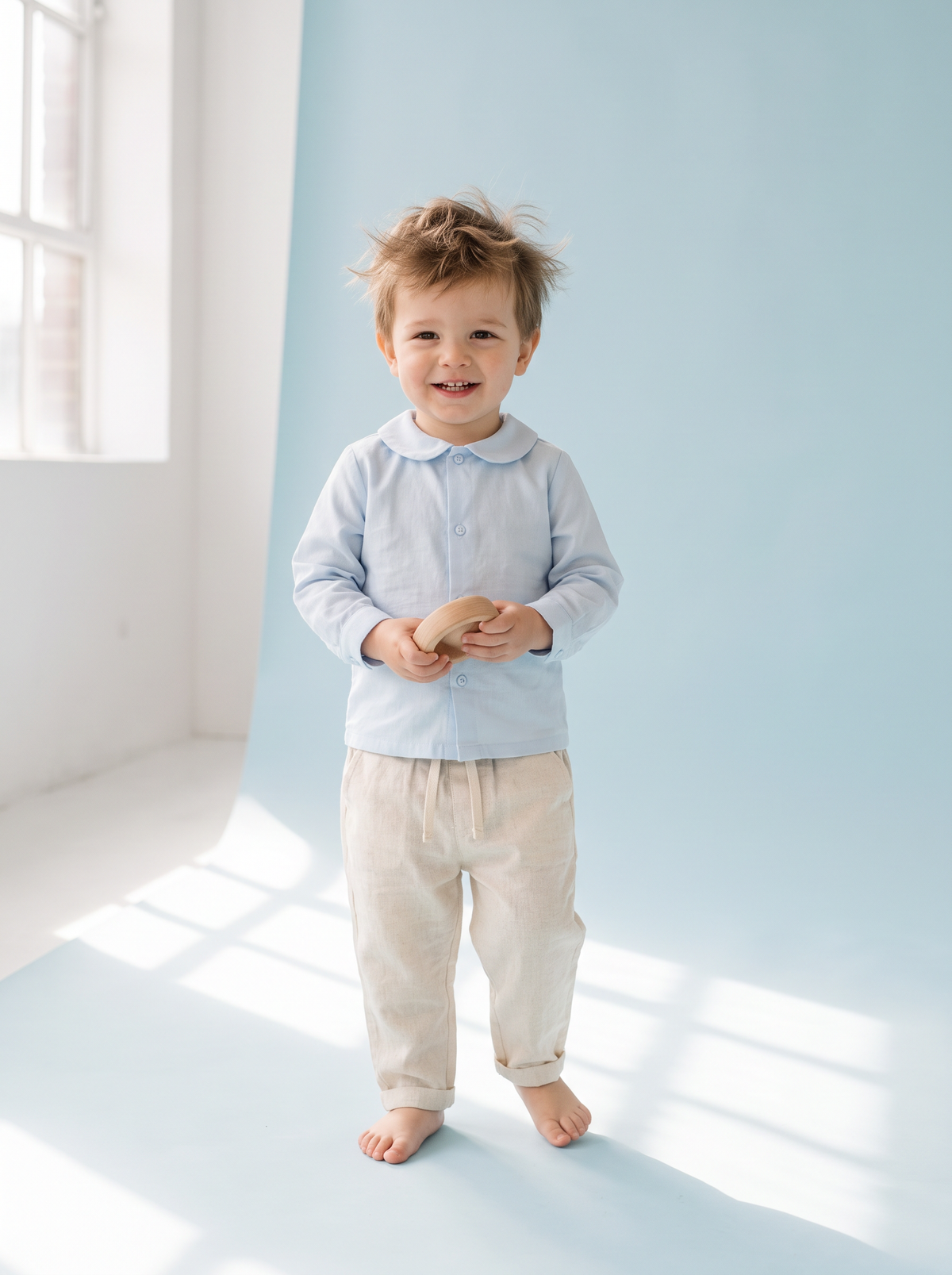
Toddlers run hot, climb everything and go through a lot of laundry. Natural fabrics handle all of that well, but linen and cotton each have their strengths. Here's how they compare, season by season.
Linen in a nutshell
Linen is woven from flax fibres. It's one of the most breathable fabrics there is, it dries quickly, and it feels cool against the skin. It creases easily, and it softens a lot over the first few washes.
Cotton in a nutshell
Cotton is soft from day one, a little warmer than linen, and comes in many weaves, from airy mul to stretchy jersey. It's easy to wash and very forgiving.
Side by side
| Linen | Cotton | |
|---|---|---|
| Feel | Cool, a little textured, softens with washing | Soft right away |
| Breathability | Excellent | Very good (depends on weave) |
| Warmth | Cool | Light to medium |
| Drying time | Fast | Medium |
| Creasing | Creases easily | Creases less |
| Best for | Hot days, travel, outdoor play | Every day, layering, sleep |
Spring and summer
Canadian summers can be hot and humid, especially in Ontario and Quebec. Linen shines here: a loose linen shirt and pull-on pants keep a toddler cool at the park or the cottage, and they dry fast after a splash pad. Light cotton works well too, especially for naps.
Fall and winter
Indoors, homes are warm and dry. Cotton is the easy base layer under a knit, and linen pants still work in heated rooms. Outdoors, layer natural fibres under a proper snowsuit. Cashmere or wool makes a light, warm middle layer.
For sensitive skin
Both fabrics are natural and breathable. Many parents find undyed or gently dyed cloth a simple place to start. Wash new clothes before the first wear.
Our take
We like linen for warm months and active days, and cotton for every day and layering. You don't have to choose just one. See our Mauve Linen Mandarin Shirt and Linen Drawstring Pants, or browse the Toddler 2–6 collection.